Supply Chain Humour: How a Slice Nearly Triggered a $200Mill AP-Lanche
30-Aug-2025 - SCM4ALL Team
Supply Chain Humour - How a Slice Triggered a $200Mill AP-Lanche - SCM4ALL is a practical supply chain topic that helps readers understand the core concepts, business implications, and real-world applications behind modern operations.
Many moons ago, I was involved in the systems support function of a large organisation. The following account, in which I was put in some of the firefighting and the blame-accepting ( 😊) camps, happened more than a decade ago.
Willy was a man of routine. His days in the warehouse receiving bay followed a familiar, yet comforting rhythm of beeps, scans, and the familiar clang of pallets. On this particular Tuesday, a delivery of cheap, $8 gaskets from a supplier in Wisconsin was just another drop in the ocean of inbound freight for his Tennessee based mega distribution centre. The pallets were staged, the supplier’s manifest was primed, and Willy pulled out his trusty handheld scanner.
The first box refused to cooperate. Willy beeped, booped, and wiggled the device, but the barcode remained stubbornly unreadable. Happens, he thought, sighing. Time for manual entry. He switched the scanner to manual mode, his thumbs hovering over the keypad.
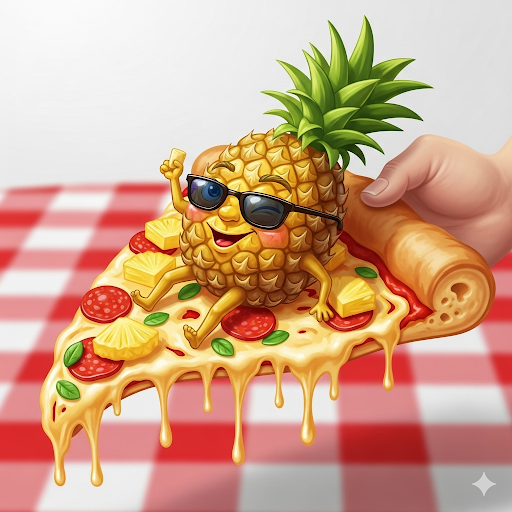
On a normal day, this would be a simple two-step process: enter the SKU, then enter the quantity. But today, a loud argument broke out between two forklift drivers about the best pizza topping, and Willy, distracted by the heated debate over pineapple, made a fatal misstep.
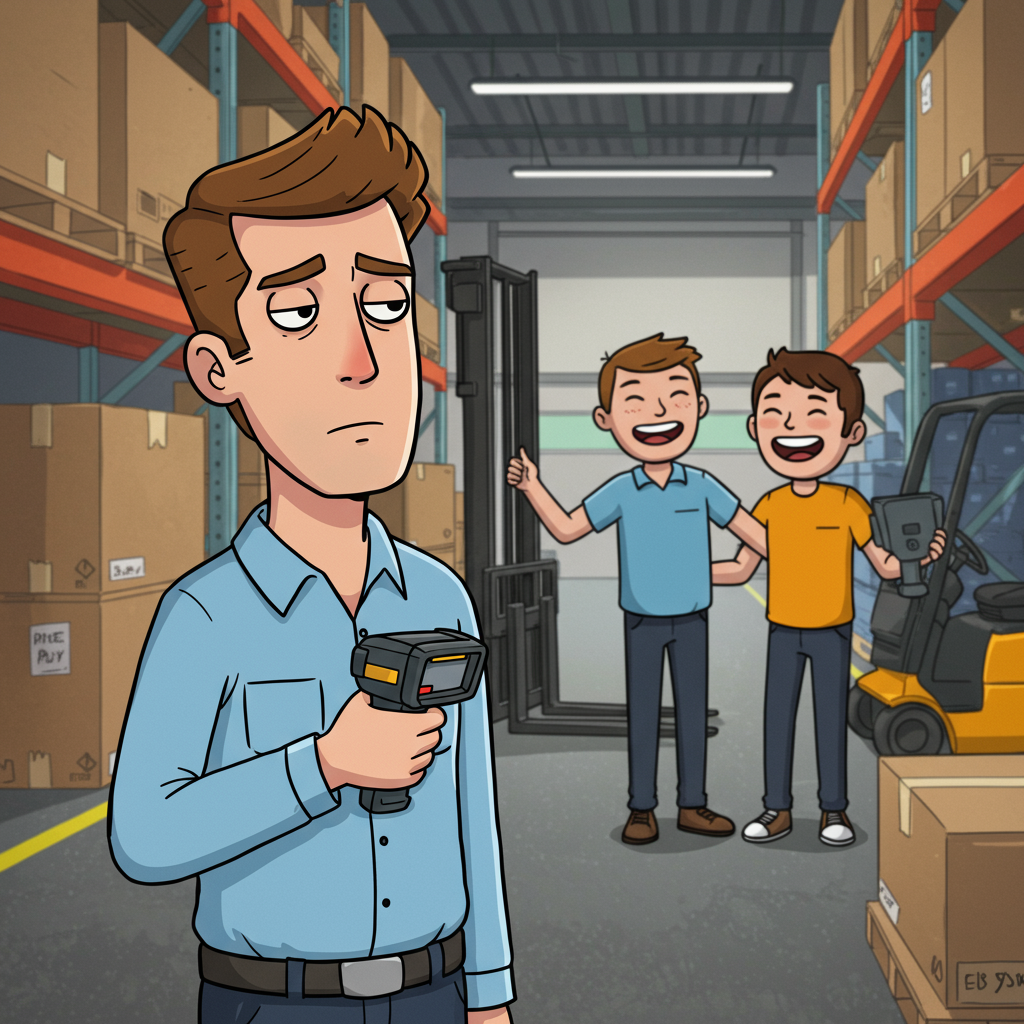
His thumb, aimed for the SKU Code field, slipped into the quantity field. Without looking down, and still listening to the pineapple-hater’s impassioned speech, Willy keyed in the item's 8-digit SKU: 24789134. He hit 'enter.'
The system, a marvel of modern, blind automation, didn't bat an eye. It saw a valid 8-digit number in the quantity field and, like a diligent but gullible soldier, accepted the command without question.
The WMS (Warehouse Management System), a highly-tuned machine designed to never doubt its user, logged the entry and shot it up to the parent ERP (Enterprise Resource Planning) system.
The ERP, a grand old beast of corporate data, received the command and, with a digital flourish, created a payable entry for the Wisconsin supplier. It took the 24789134 units and multiplied them by the item's unit cost of $8.
The total came to an even, and frankly, ridiculous, $198,313,072.00.
Meanwhile, the humble box of gaskets was received, labelled, and sent on its merry way to a storage bin. No alarms sounded. No red lights flashed. The system was convinced it had just taken receipt of enough gaskets to cover a small country. The SCM gears whirred on, blissfully unaware of the financial time bomb ticking away.
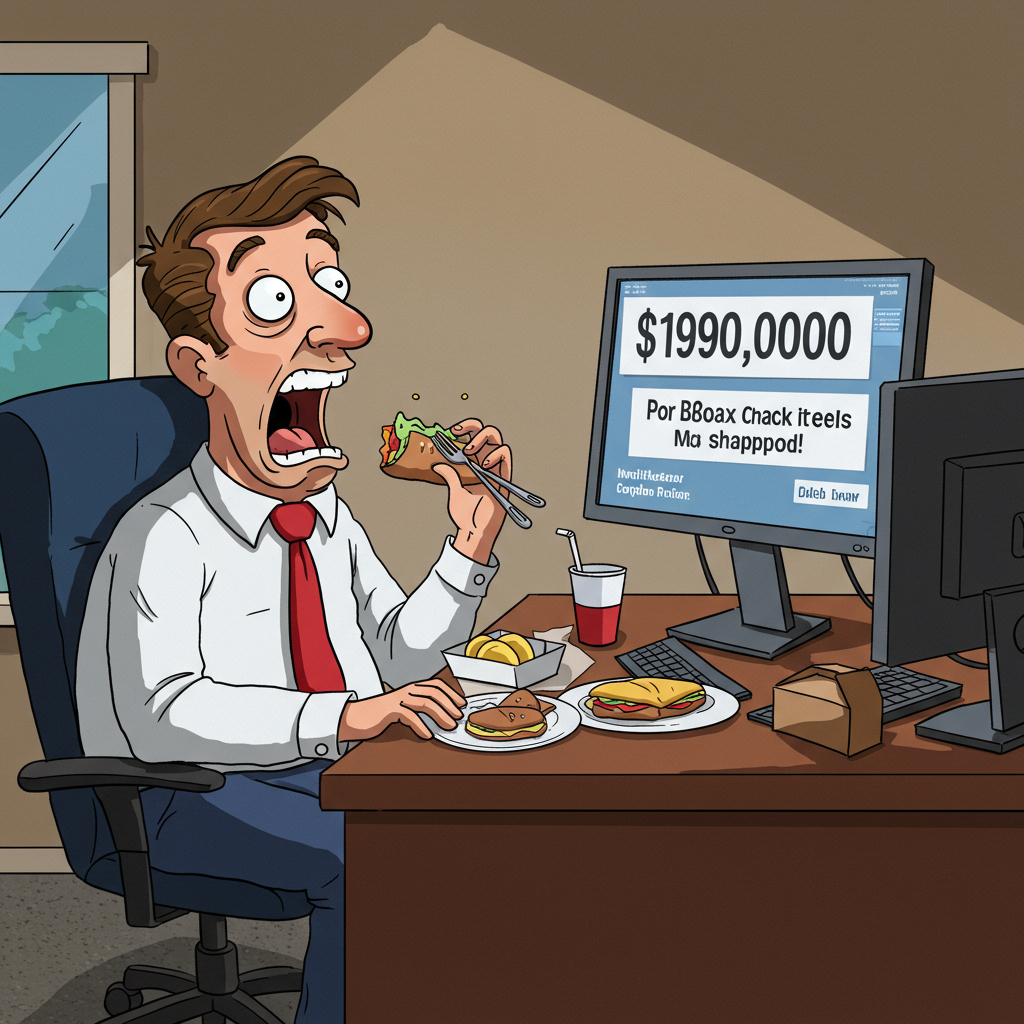
The supplier in Wisconsin, a small family-run business, was equally bewildered. Their invoices usually topped out at a few thousand dollars. When they received a system-generated notice of an incoming payment for hundreds of millions, their first thought was that their company had been acquired by a tech giant. They were already planning a company-wide celebration.
The colossal mistake only surfaced when the payable entry, a digital behemoth unlike any the company had ever seen, hit the finance department’s value check. Karen from Accounts Payable, a woman whose entire existence revolved around double-checking numbers, nearly spit out her coffee. A value of nearly $200 million for a pallet of gaskets? Her screen flashed red, screamed with error codes, and likely felt a pang of existential dread.
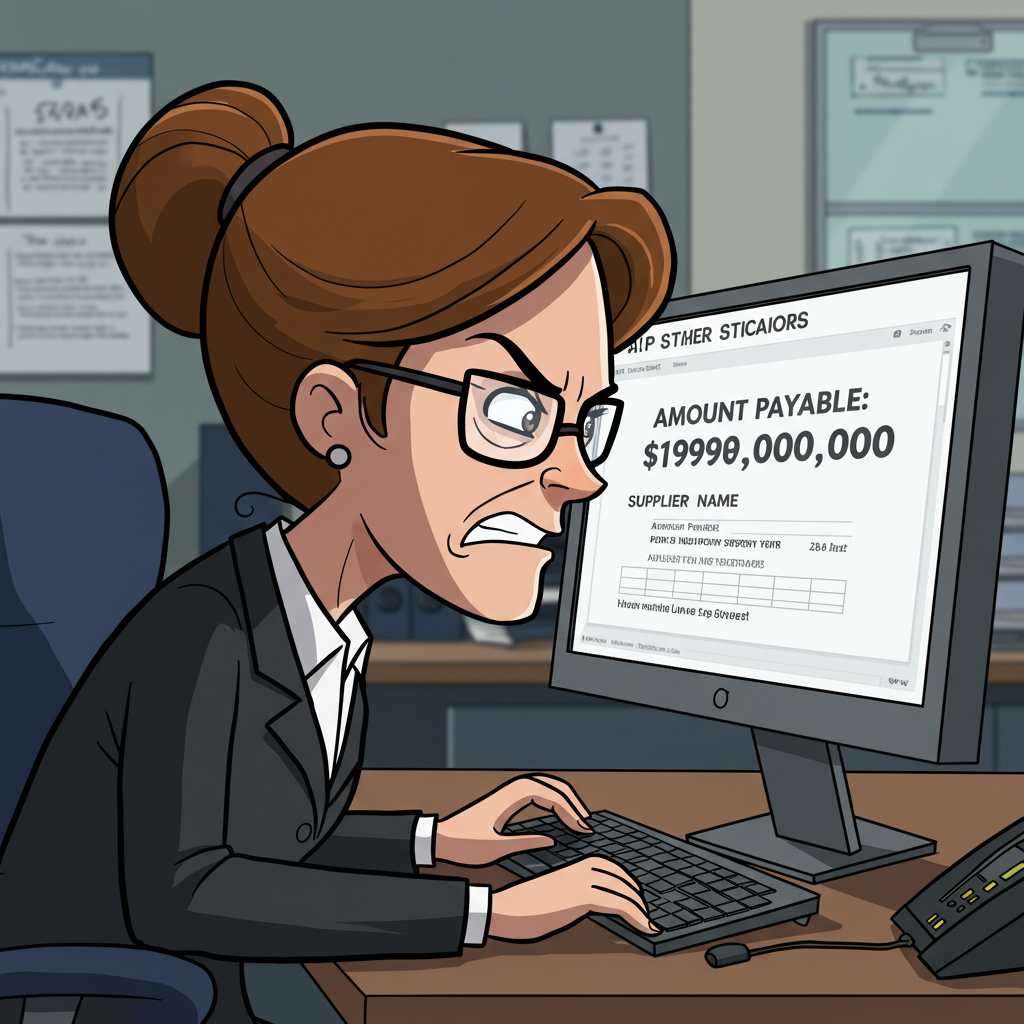
It took three department heads, a systems team (yours truly), forensic analysis of the data and one very confused Willy to trace the error back to the original entry. Willy, upon learning the true scale of his mistake, simply said, "Oh. That's what that pineapple debate was about."
The great gasket incident became a cautionary tale whispered in company circles, a testament to the idea that no amount of automation can replace a human’s capacity for common sense—or their ability to get distracted by pizza toppings. It served as a stark, multi-million-dollar reminder that in the world of supply chain, a simple typo could turn out to be not such a simple typo.