Keiretsu Made Simple: Japan’s Supply Chain Secret Explained
25-Sep-2025 - SCM4ALL Team
Keiretsu Made Simple: Japan’s Supply Chain Secret Explained is a practical supply chain topic that helps readers understand the core concepts, business implications, and real-world applications behind modern operations.
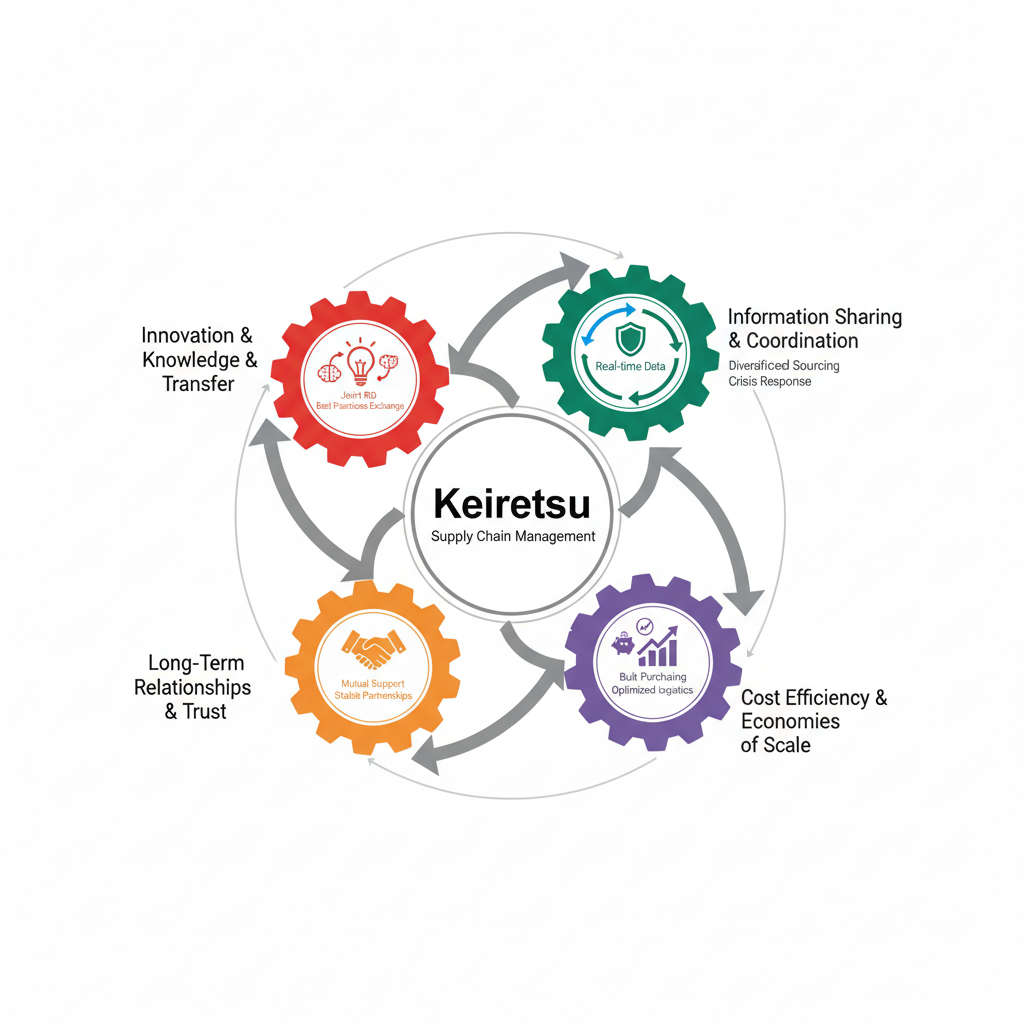
When discussing Supply Chain Management (SCM), one cannot ignore the influence of Japanese business practices. Among them, the concept of Keiretsu has stood out as a model of collaboration, resilience, and long-term value creation. While its structure has evolved over the decades, the principles of Keiretsu remain deeply relevant to global supply chain leaders in 2025.
What is Keiretsu from an SCM Perspective?
Keiretsu refers to a network of interlinked companies that remain legally independent but operate with a spirit of cooperation and mutual benefit.
In SCM, it represents a structured alliance of manufacturers, suppliers, distributors, and financial institutions that work together to stabilize supply, reduce risk, and increase competitiveness.
Unlike pure vertical integration, Keiretsu relies on long-term trust, cross-shareholding, and relationship-based governance—think of it as a family of companies united through loyalty and shared destiny.
Origins of Keiretsu
The roots of Keiretsu go back to post-World War II Japan. Before the war, Japan’s economy was dominated by Zaibatsu—large industrial conglomerates such as Mitsui, Mitsubishi, and Sumitomo.
After the war, the Allied Occupation dissolved the Zaibatsu, leading to the formation of looser networks known as Keiretsu.
- Horizontal Keiretsu: Diverse companies bound by a central bank or trading firm (e.g., Mitsubishi Group).
- Vertical Keiretsu: Supply chain–focused alliances around a lead manufacturer (e.g., Toyota’s supplier ecosystem).
Benefits of Keiretsu for Companies
- Supply Chain Stability: Long-term supplier relationships reduce uncertainty and improve quality.
- Shared Risk and Support: Cross-shareholding and bank involvement provide financial stability during crises.
- Economies of Scale and Scope: Specialization allows companies to focus on strengths and share resources.
- Reduced Transaction Costs: Trust reduces renegotiation needs; knowledge sharing boosts efficiency.
- Innovation Through Collaboration: Close ties foster co-development of products and technologies.
Keiretsu Beyond Japan
Though unique in name, Keiretsu principles have influenced global SCM models:
- South Korea – Chaebol: Samsung, Hyundai, LG with internal supply networks and financial cores.
- Germany – Industrial Alliances: Volkswagen and others with bank-supported supplier ecosystems.
- United States & Europe – Supplier Alliances: Ford, GM, Boeing, Airbus with tiered supplier networks.
- Retail – McDonald’s: Vested supplier model aligns incentives with long-term success.
Real-World Examples
- Toyota: Vertical Keiretsu with tiered suppliers, lean manufacturing, and Just-in-Time systems.
- Mitsubishi Group: Horizontal Keiretsu with cross-shareholding across finance, automotive, and trading.
- Sony & Electronics Networks: Historically long-term supplier relationships reflecting Keiretsu values.
Is Keiretsu Still Relevant in 2025?
Yes—but in an evolved form.
- Decline of Traditional Keiretsu: Globalization and deregulation have weakened rigid structures.
- Persistence of the Philosophy: Trust-based supplier relationships remain vital in key industries.
- Digital Keiretsu: Real-time data sharing and platform alliances now drive resilience and innovation.
In a world shaped by pandemics, geopolitical shifts, and climate risks, companies still need stable, trust-driven supply networks—the core of Keiretsu thinking.
Conclusion
Keiretsu may have emerged in post-war Japan, but its essence remains relevant in 2025. While traditional cross-shareholding groups have faded, the principles of cooperation, risk-sharing, and long-term supplier alliances are alive and well.
Whether in Toyota’s supplier network, McDonald’s vested model, or digital ecosystems linking global firms, Keiretsu continues to inspire supply chain leaders who value trust and shared growth.
The lesson? Supply chains thrive on trust, collaboration, and shared value—concepts that Keiretsu pioneered decades ago.