📦 Order Management 101: A Beginner’s Guide to Sales Orders in Supply Chain
31-Aug-2025 - SCM4ALL Team
Demystifying Sales Order Management: A Beginner’s Guide for SCM Learners is a practical supply chain topic that helps readers understand the core concepts, business implications, and real-world applications behind modern operations.
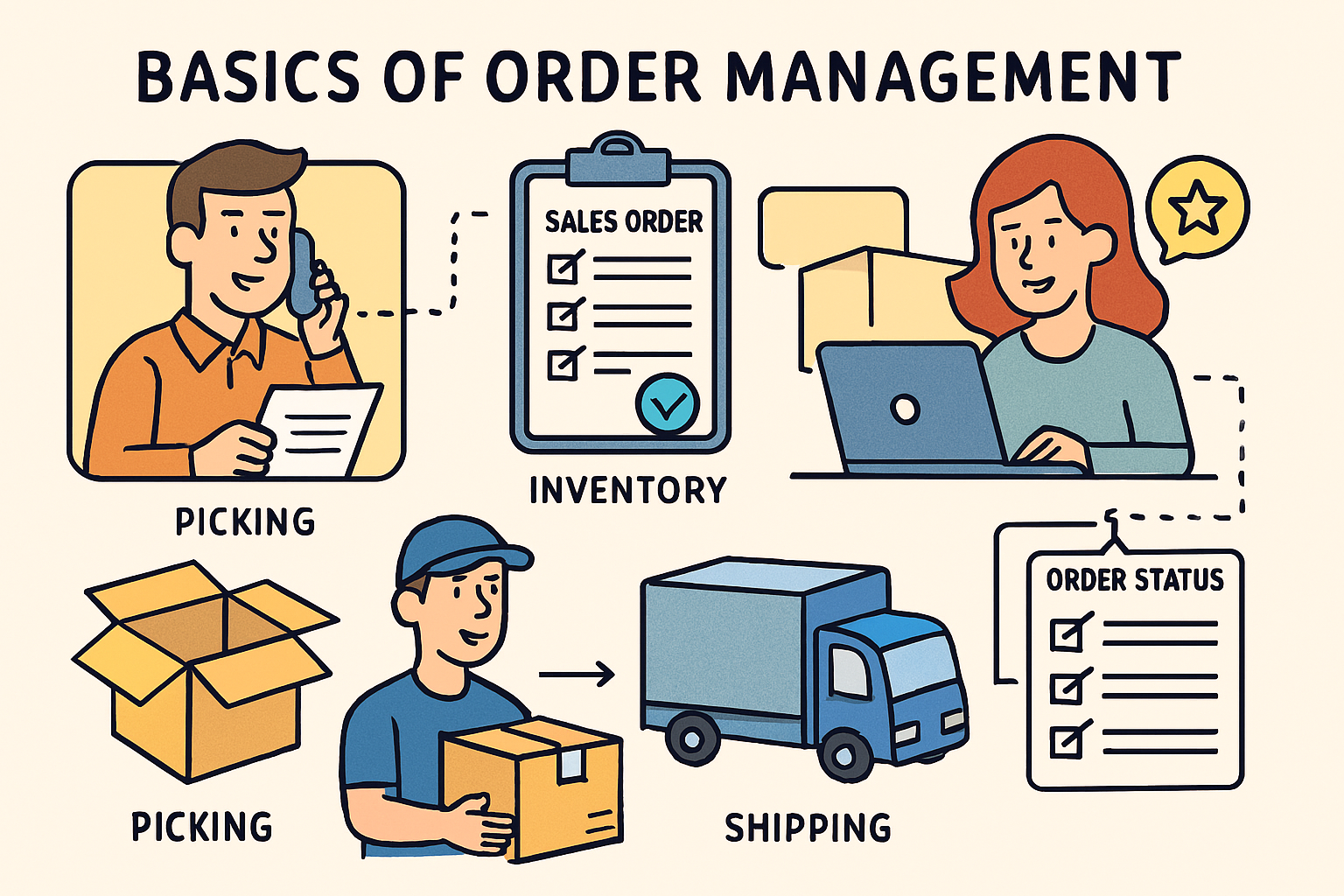
In the vast and intricate world of Supply Chain Management (SCM), Order Management is the moment where customer demand transforms into operational action. Whether you're a student, a professional, or a curious entrepreneur, understanding how orders are created, processed, and optimized is essential to grasping the flow of goods and services.
This blog post breaks down the essential terminology, processes, and performance metrics of order management—along with real-world anecdotes from large corporations, medium enterprises, and small traders.
🧠 Key Order Management Terms Every SCM Learner Should Know
- Sales Order (SO): A document issued by a seller confirming the sale of goods or services to a buyer.
- Purchase Order (PO): A document issued by the buyer requesting goods or services from a seller.
- SKU (Stock Keeping Unit): A unique identifier for each product variant.
- Order Fulfillment: The complete process of receiving, processing, packing, and delivering an order.
- Backorder: A situation where demand exceeds supply, and the item is temporarily unavailable.
- Lead Time: The time between placing an order and receiving the goods.
- Blanket Order: A long-term agreement to purchase a large quantity over time.
- Bill of Lading: A legal document between the shipper and carrier detailing shipment details.
- Order Management System (OMS): Software that automates and tracks the entire order lifecycle.
📋 Prerequisites for Generating a Sales Order
Before a Sales Order can be created, certain information must be available:
- Customer Information: Name, addresses, contact details, account status.
- Product Details: SKUs, descriptions, configurations, availability.
- Pricing and Discounts: Unit price, discounts, taxes, trade agreements.
- Delivery Terms: Shipping method, delivery date, location.
- Payment Terms: Credit limits, payment method, due dates.
- Sales Agreement: Blanket orders or long-term contracts.
🔄 How Sales Orders Are Generated
🏢 Large Corporations
- EDI (Electronic Data Interchange): Automated data exchange between systems.
- ERP Systems: Platforms like SAP or Oracle generate SOs from incoming POs.
- Customer Portals: Clients place orders directly online.
Example: Dell receives an EDI-based PO from a corporate client. Their ERP system validates it, creates a sales order, and triggers component procurement and assembly.
🏭 Medium Enterprises
- Email or Web Forms: Orders manually entered into ERP or OMS.
- CRM Integration: Quotes converted into SOs via platforms like Zoho.
Example: A regional pump distributor receives an email PO and enters it into Zoho Inventory.
🛍️ Small Traders
- Manual Entry: Orders logged via spreadsheets or basic tools.
- Marketplace Orders: Platforms like Amazon auto-generate SOs.
Example: A spice seller receives an Instagram DM and logs the order manually into a Google Sheet.
🔁 Lifecycle of a Sales Order
- Order Entry:SO is created in the system with all required details.
- Validation:Checks for stock availability, pricing accuracy, and customer credit limits.
- Confirmation:The customer receives an order confirmation with delivery expectations.
- Picking and Packing:Warehouse staff retrieve and package the items.
- Shipping:Goods are dispatched; tracking info is shared.
- Invoicing:Invoice is generated and sent to the customer.
- Payment Collection:Payment is received and reconciled.
- Returns/Adjustments:If needed, returns are processed and credit notes issued.
In SAP, this lifecycle is tightly integrated—sales order triggers MRP, which leads to production or procurement, followed by delivery and billing.
📊 Metrics to Evaluate Order Performance
| Metric | What It Measures |
|---|---|
| Order Cycle Time | Time from order receipt to delivery |
| Order Fill Rate | % of orders fulfilled completely without backorders |
| Order Accuracy | % of orders delivered without errors |
| Time to Ship | Time taken from order confirmation to dispatch |
| Return Rate | % of orders returned due to defects or mismatches |
| Customer Satisfaction Score | Feedback on order experience |
| Order Value Trends | Average order size and revenue per order |
Example: Amazon tracks order accuracy and cycle time obsessively to ensure Prime delivery promises are met.
📈 How Sales Order Data Drives Business Improvement
- Demand Forecasting: Predict future demand and optimize inventory.
- Customer Behavior Analysis: Identify buying patterns and preferences.
- Process Optimization: Spot bottlenecks and streamline operations.
- Product Strategy: Refine offerings based on return data and frequency.
- Revenue Insights: Track high-performing SKUs and customer segments.
Example: A fashion brand notices high return rates for a specific SKU. They investigate sizing issues and adjust the product design, reducing returns and improving margins.
🧠 Final Thoughts
Sales order management is more than just paperwork—it’s the backbone of customer satisfaction and operational efficiency. Whether you're running a global supply chain or a local storefront, understanding how orders are created, processed, and optimized is key to building a resilient and responsive business.
Let’s keep democratizing SCM knowledge—one concept at a time.