
Everyday S&OP : How small businesses do it ?
29-Sep-2025 - SCM4ALL Team
S&OP in Real Life: How a Baker and a Tire Shop Use Sales & Operations Planning is a practical supply chain topic that helps readers understand the core concepts, business implications, and real-world applications behind modern operations.

Understanding S&OP as a thought process through examples
Sales and Operations Planning (S&OP) is often thought of as a complex process reserved for big corporations with large supply chains. But in reality, S&OP principles quietly guide the decisions of even the smallest businesses. Let’s explore this through two relatable examples—a small bakery in Orlando and a tire shop in middle Tennessee.
Example 1: The Smalltime Baker in Orlando
Imagine a baker in Orlando who runs a neighborhood shop. Each morning, they must decide how much bread, pastries, and cakes to prepare. While they may not know it, they’re practicing S&OP on a daily basis.
- Forecasting Demand: The baker looks at past sales and considers special factors like weather, weekends, and holidays. This is essentially demand planning.
- External Demand Signals: They also check if there’s a nearby conference or convention, when schools start summer break, or even browse hotel booking portals anonymously to gauge tourist inflows. This is demand sensing.
- Capacity Planning: Limited ovens and staff mean they must decide how much can realistically be baked in time.
- Inventory Management: Flour, sugar, and butter need careful stocking to avoid spoilage or shortages.
- Sales and Operations Alignment: Promotions (like muffin specials) must align with what the bakery can produce.
- Execution & Review: Daily results highlight forecast errors, feeding improvements for the next day.
In simple terms, the Orlando baker is running a daily S&OP cycle—forecast, plan, align, execute, review—even if they’ve never heard the acronym.
Example 2: The Specialty Tire Firm in Tennessee
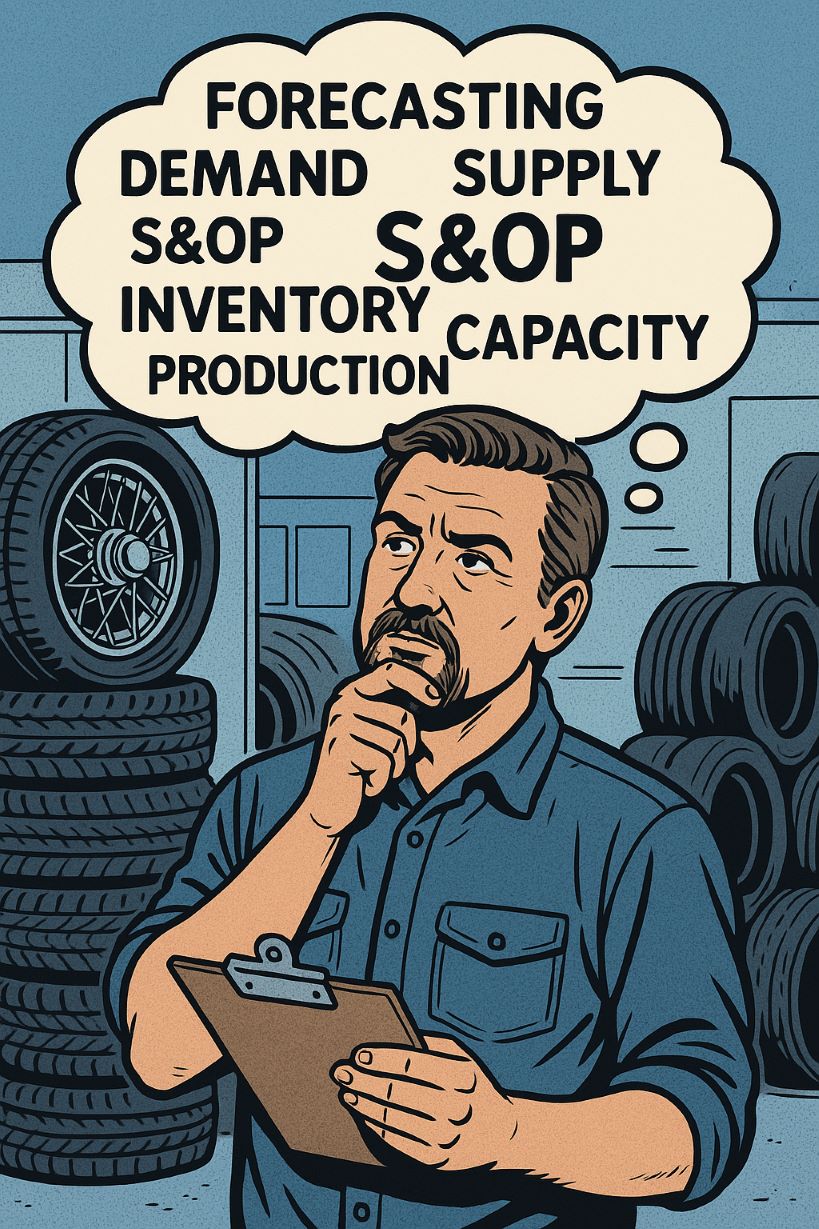
Now, let’s look at a niche business in middle Tennessee—a small tire shop specializing in wheels and tires for classic and vintage cars. Their operations may seem far removed from the baker, but they too rely heavily on S&OP.
- Demand Sensing: The owner monitors specialty auto platforms, concours events, and classic car meetups on social media to predict what models will need tires soon.
- Demand Forecasting: Customs data on vintage imports and historical sales inform which SKUs to stock.
- Product Portfolio Planning: With only about 30 tire types, adding or dropping SKUs requires careful portfolio management.
- Supply Planning: Balancing long distributor lead times with safety stock ensures they don’t miss rare orders.
- Sales and Operations Alignment: Marketing at local car shows is coordinated with available inventory.
- Execution & Review: Monthly reviews compare forecasts to sales, highlighting excess stock or lost opportunities.
These cycles demonstrate how even a small tire shop practices S&OP continuous improvement without calling it that.
Why These Examples Matter
Whether it’s a baker with ovens or a tire shop with specialty SKUs, both are practicing the essence of S&OP:
- Forecasting demand using historical and external signals.
- Balancing capacity and resources with demand.
- Managing inventory to reduce waste or shortages.
- Aligning sales with operations so promises match reality.
- Reviewing and adjusting to improve future performance.
Closing Thought
S&OP isn’t just a corporate buzzword—it’s the discipline of balancing what customers want with what you can deliver. Whether you’re kneading dough in Orlando or fitting classic Mustangs with new tires in Tennessee, you’re making S&OP decisions all the time. The only difference is scale.